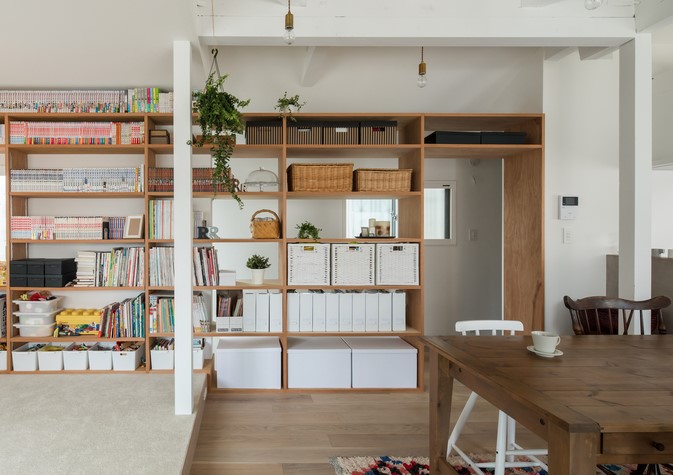
I once walked into a client’s apartment in the city where every single square inch of the floor was occupied. Bookshelves, side tables, and decorative bins had created a “canyon effect”—the room felt five sizes smaller than its actual square footage, and the air felt stagnant. The client wanted more storage but felt they had hit a literal wall. My solution wasn’t to add more furniture, but to make the furniture “disappear.”
In my decade of navigating the guts of residential structures, I’ve found that most homeowners suffer from “floor-plan blindness.” We are trained to look down for storage solutions, but the real untapped real estate is the vertical plane. This is where floating shelves transition from a mere TikTok trend into a serious tool for spatial engineering.
When you strip away the bulky vertical supports and visible brackets of traditional shelving, you aren’t just adding a ledge; you are altering the architectural “breathability” of a room. It’s a trick of the eye that provides massive utility without the visual weight that traditional cabinetry imposes.
The Physics of the “Floating” Illusion: Hidden Support Systems
To the uninitiated, a floating shelf looks like it’s defying gravity. But as someone who has repaired walls after a DIY “floating” project went south, I can tell you the magic is all in the internal skeleton.
The Cantilever Principle
Think of a floating shelf like a person standing with their arm straight out. If you hang a heavy bag on their wrist, their shoulder (the wall connection) has to exert a massive amount of upward force to keep the arm from dropping. In technical terms, this is a cantilever.
Traditional shelves use a triangle (a bracket) to support the weight. Floating shelves, however, rely on an internal metal or wood cleat hidden inside a hollow-core shelf. The entire load is concentrated on the fasteners that bite into your wall studs. If those fasteners fail, the lever effect will tear the shelf right out of the drywall, often taking a chunk of the wall with it.
Key Technical Components to Look For
When you are shopping for or building your own, pay attention to these LSI specifications:
-
Internal Bracket/Cleat: Look for heavy-duty powder-coated steel with a “backplate” thickness of at least 1/4 inch.
-
Shear Strength: This refers to the fastener’s ability to resist being snapped off by the downward force.
-
Torsion/Sag: A high-quality shelf will have a slight upward “pitch” (usually 1-2 degrees) when empty, so that when it is loaded with books, it levels out perfectly instead of sagging.
Architectural Utility: Where to Deploy Your Shelving Strategy
Floating shelves aren’t just for displaying succulents in the living room. In a modern home, they serve as high-utility zones that can replace entire pieces of furniture.
The “Ghost” Nightstand
In small bedrooms, a traditional nightstand often blocks access to closet doors or makes the bed feel cramped. By installing a single, deep floating shelf at mattress height, you reclaim the floor space below for a laundry basket or simply for visual “flow.” It creates a minimalist, airy aesthetic that makes the room feel like a high-end hotel suite.
The Kitchen “Open-Concept” Hybrid
The trend of removing upper cabinets is polarizing, but for many, it’s a necessity for light. I often suggest replacing one or two heavy, light-blocking cabinets with a thick-milled wood floating shelf. This allows you to keep your daily-use items (plates, mugs) within reach while making the kitchen feel double its actual size.
Professional Installation: A Step-by-Step Guide to Maximum Load-Bearing
If you want a shelf that can actually hold a collection of heavy cookbooks rather than just a few picture frames, you must follow a rigid installation protocol.
Step 1: The “Stud-First” Assessment
Never, and I mean never, rely on drywall anchors alone for a floating shelf.
-
Use a high-quality deep-scan stud finder to locate the centers of your 2×4 wall studs.
-
Mark these locations with a vertical line.
-
Your internal bracket must be screwed directly into at least two studs to achieve any real load-bearing capacity.
Step 2: Leveling the “Skeleton”
In my early days, I learned that walls are rarely flat and floors are rarely level.
-
Use a 4-foot level to mark your horizontal line.
-
If your internal bracket is slightly crooked, the shelf will act as a slide for anything you place on it.
-
Pro Tip: Use a laser level for the most accurate results across long spans.
Step 3: Fastening and Securing
Use 3-inch or 4-inch GRK rugged structural screws or lag bolts. Standard drywall screws are too brittle and will snap under the shear force of a loaded shelf. Once the bracket is on the wall, slide the shelf “sleeve” over it and secure it with the underside set screws to prevent it from sliding off the cleat.
Expert Advice: Tips Pro and Hidden Warnings
In ten years of home improvement, these are the insights that separate a professional job from a weekend fail.
The “Depth-to-Support” Ratio
The deeper the shelf, the more stress it puts on the wall. For a standard 2×4 stud wall, I recommend keeping your shelf depth to 10 inches or less. If you go to a 12-inch or 14-inch “deep” shelf, you are drastically increasing the leverage against the wall, and you will likely see a visible gap form between the shelf and the drywall over time.
💡 Tips Pro: The Silicone “Grip” Trick
Even with set screws, some hollow-core floating shelves can feel a bit “rattly” on their brackets. Before you slide the shelf onto the metal bracket, apply a thin bead of clear silicone adhesive along the top of the bracket arms. Once the shelf slides on and the silicone cures, it creates a rock-solid, vibration-free bond that feels like a permanent part of the house.
Material Comparison: Real Wood vs. MDF vs. Metal
| Material | Weight Capacity | Durability | Best For |
| Solid Hardwood | High | Excellent (can be refinished) | Kitchens, heavy books |
| MDF / Veneer | Medium | Moderate (susceptible to moisture) | Bedrooms, decor only |
| Powder-Coated Metal | Extreme | Industrial (won’t warp) | Garages, heavy tool storage |
Conclusion: Elevating Your Home’s Potential
Mastering the use of floating shelves is about more than just finding a place for your keys. It is about understanding the “spatial logistics” of your home—recognizing that your walls are waiting to do the heavy lifting that your floors can no longer handle. Whether you’re trying to open up a cramped kitchen or create a streamlined home office, these architectural elements provide the perfect balance of form and function.
Are you ready to stop cluttering your floor and start utilizing your walls? What’s the biggest challenge you’ve faced when trying to install shelving in the past? Let me know in the comments below, and let’s figure out how to give your home the “lift” it needs!
