You check into a highly rated short-term rental or a boutique hotel after a long day of travel. You unpack your bags, lock the door, and finally lie down to rest. Suddenly, you hear a faint click, the doorknob turns, and the door begins to swing open—it’s either a confused guest with a duplicate key card or an employee stepping in unannounced. In that single, heart-stopping second, you realize that a standard lock only keeps honest people out.
Over my 10+ years of working as a home security consultant and home improvement contractor, I’ve broken into, rekeyed, and reinforced hundreds of entry doors. If there is one crucial insight I can share from the field, it is this: the built-in hardware on most interior and temporary doors is shockingly vulnerable. Whether you are renting an apartment with a landlord who keeps a spare key, staying in temporary housing, or simply working in a home office that needs absolute privacy, relying on standard locks isn’t always enough. That is where deploying a portable door lock changes the equation entirely, giving you physical control over your environment without violating your lease or damaging property structural elements.
The Physics of Secondary Enforcement: How It Actually Works
Think of a standard built-in deadbolt or latch bolt as a single bridge pillar holding up a massive highway. If that one pillar fails, is bypassed, or is opened with a duplicate key, the entire structure collapses. A portable door lock acts like an emergency support beam that you wedge directly into the foundation.
Even if someone possesses a physical master key or hacks a digital keypad from the outside, they cannot open the door because the mechanical forces are completely redirected. Instead of relying on a tiny latch inside the wall casing, a temporary lock uses the immutable laws of leverage to anchor the door panel directly to the solid metal frame.
During my years analyzing residential entry systems, I’ve found that the psychological peace of mind a temporary barrier provides is backed by solid engineering. It creates a secondary physical barrier that requires an immense, destructive amount of external force to overcome, effectively buying you time and creating an audible alert if a breach is attempted.
Anatomy of a Pro-Level Portable Door Lock
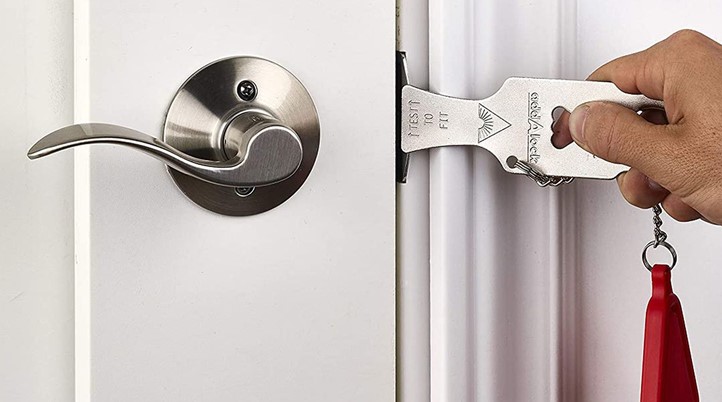
For beginners and intermediate security enthusiasts, looking at temporary locking devices online can be confusing. They look like strange metal plates with chains attached. Let’s break down the technical components of the most popular and reliable style: the dual-plate friction lock.
1. The Strike Plate Component
This is the heart of the device. It is a flat piece of stamped, heavy-duty stainless steel or chrome-plated carbon steel that features a small metal tooth. You place this tooth directly into the existing door strike plate opening on the door frame. When you close the door, this plate is clamped securely between the door sash and the door jamb.
2. The Moving Engagement Block
Once the door is shut, a separate solid plastic or aluminum triangular wedge block is slid into a designated slot on the exposed metal plate. This block sits flush against the interior face of the door.
3. The Structural Core
Because the block is wider than the gap between the door and the frame, any attempt to push the door inward from the outside forces the block to press harder against the frame. This mechanical resistance effectively locks the system in place using the intruder’s own applied force.
+------------------------+---------------------------------+-----------------------------------+
| Feature                | Standard Door Chain Lock        | Heavy-Duty Portable Door Lock     |
+------------------------+---------------------------------+-----------------------------------+
| Installation Type      | Permanent (Requires screws)     | Temporary (No tools required)     |
| Main Failure Point     | Tiny wood screws ripping out    | Structural door frame splitting   |
| Lease Friendliness     | Low (Damages wood trim)         | High (Zero footprint left behind) |
| Force Resistance       | Low (Easily kicked open)        | High (Uses mechanical leverage)   |
+------------------------+---------------------------------+-----------------------------------+
Technical Compatibility: Will It Fit Your Door?
As an expert, I must give you a quick reality check: a portable lock is not a universal skeleton key. Before you buy one for an upcoming trip or home modification project, you must verify that your door meets specific physical tolerances.
-
Inward Opening Only: Portable locks are strictly engineered for doors that open inward toward the room you are trying to protect. If a door swings outward into a hallway, these devices cannot anchor properly.
-
The Nickel Clearance Rule: Because the metal strike plate needs to pass between the door edge and the jamb, you need a small physical gap. A simple test is to try sliding a standard US nickel (or any coin roughly 2mm thick) into the gap when the door is closed. If the coin binds or won’t fit, the door tolerances are too tight for a standard metal plate.
-
Latch Bolt Alignment: Ensure the internal cutout opening of the portable lock matches the dimensions of your door’s existing latch bolt. Standard residential latches fit perfectly, but oversized commercial locksets might require a specialized large-hole portable device.
The Emergency Egress Trap
The absolute greatest strength of a portable door lock is that it cannot be bypassed from the outside. However, that is also its greatest danger. In the event of a sudden room fire, structural collapse, or medical emergency, you must be able to remove the lock instantly in total darkness. Never use a portable lock if the moving engagement block sticks or jams. Practice removing the block in under three seconds with your eyes closed until the muscle memory is flawless.
Pro-Tips for Maximizing Temporary Privacy
Once you have verified your door tolerances and selected a high-quality, stamped-steel portable door lock, follow these operational tips to guarantee maximum structural security:
-
Combine with a Door Stop Wedge: For the ultimate mobile security protocol, pair your portable plate lock with a heavy-duty rubber door wedge kicked tightly under the base of the door. The plate stops the top latch from shifting, while the wedge prevents the bottom of the door from flexing under heavy impact.
-
Inspect the Existing Strike Plate Screws: A portable lock is only as strong as the door frame it links to. If you are using it at home or in a long-term rental, open the door and check the screws holding the metal strike plate to the wood frame. If they are short, 1/2-inch screws, replace them with 3-inch heavy-duty wood screws that anchor deep into the structural wall studs behind the trim.
-
Keep It Elevated Out of Reach: If you are using a portable device to keep toddlers from wandering out of a hotel room or into a hazardous home workshop, install the portable lock higher up on the door seam, well out of their physical reach.
Mastering Your Personal Environment
Ultimately, home improvement and property management are about more than just aesthetics, paint colors, or beautiful cabinetry; they are about taking control of your physical safety and establishing clear, uncompromised boundaries.
By understanding the mechanical physics of entry systems and keeping a high-quality portable door lock in your travel gear or home toolkit, you don’t have to rely on an unknown property owner’s security choices. You have the power to turn any standard inward-swinging door into an impenetrable sanctuary of privacy within seconds.
Over to You!
Have you ever experienced a sketchy situation where someone walked into your hotel room or rental property unannounced? Are you considering a portable lock for your upcoming travel adventures or a temporary living situation? Let’s talk about your door clearance measurements, safety setups, or hardware questions in the comments section below!
