Last summer, I got a frantic call from a homeowner in downtown Austin whose south-facing living room felt like a commercial pizza oven by 2:00 PM every afternoon. The floor-to-ceiling windows offered breathtaking city views, but the intense solar heat gain made the space virtually unlivable, and drawing heavy blackout curtains felt like living in a windowless bunker. Instead of replacing the multi-pane architectural windows or relying on dust-collecting blinds, we retrofitted the glazing with switchable smart glass tint. Within seconds of flipping the switch, the room dropped from an unbearable glare to a comfortable, shaded sanctuary while preserving the natural light.
Over my 10+ years in structural renovation and building envelope optimization, I have seen window treatments evolve from passive fabric barriers into active energy assets. Implementing smart glass tint is no longer just a futuristic novelty for high-end luxury penthouses—it is a high-return investment in residential energy efficiency, UV protection, and instant visual privacy.
The Science of Electrochromic Technology: How Smart Glass Tint Works
To understand why this technology outperforms traditional window treatments, it helps to look closely at what is happening inside the glass stack. Standard windows reflect or absorb a fixed amount of solar radiation, but dynamic glazing allows you to dial in your light transmission on demand.
Think of smart glass tint like noise-canceling headphones, but for light waves. Instead of blocking sound, the microscopic particles inside the film rearrange themselves when exposed to a tiny electrical current, selectively tuning out blinding glare and invisible heat rays.
The primary technology behind retrofitted and factory-integrated smart tint is Polymer Dispersed Liquid Crystal (PDLC) or Electrochromic (EC) technology:
-
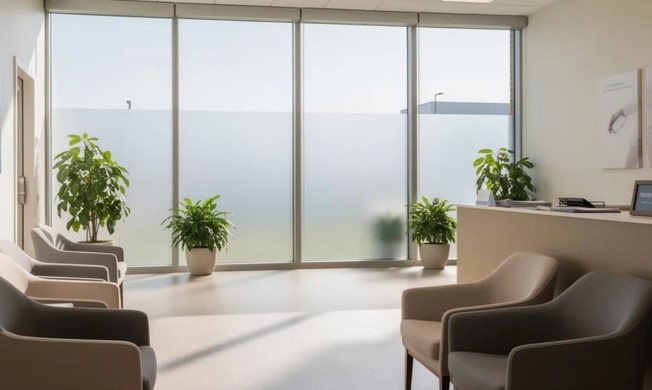
PDLC (Polymer Dispersed Liquid Crystal): Liquid crystals are scattered inside a polymer matrix sandwiched between two conductive PET films. When the power is OFF, the liquid crystals are randomly arranged, scattering light and making the glass completely opaque (frosting). When the power is ON, the electric current aligns the crystals instantly, rendering the glass transparent.
-
Electrochromic (EC) Technology: Ideal for exterior windows, EC films utilize lithium ions that move between oxide layers when a low voltage is applied. Unlike PDLC (which switches between clear and frosted), EC glass actually darkens to varying tint levels, actively modulating Visible Light Transmittance (VLT) and Solar Heat Gain Coefficient (SHGC).
Calculating the Privacy ROI: Energy Savings and Asset Value
When homeowners ask me about the return on investment (ROI) for smart glass tint, they usually expect a long payback period based on privacy alone. However, the true financial return comes from thermal regulation and protecting your home’s interior assets.
1. HVAC Load Reduction
Glass is historically the weakest link in your home’s thermal boundary. Traditional clear glass allows up to 76% of sunlight to enter your living space as heat. By dynamically lowering the Solar Heat Gain Coefficient (SHGC) during peak afternoon hours, smart glass tint can reduce summer cooling loads by up to 20–30%, directly shaving off monthly utility costs.
2. UV Damage Mitigation
Ultraviolet radiation (UV-A and UV-B) is the silent killer of hardwood floors, custom cabinetry, expensive leather furniture, and fine art. High-grade smart tint films block up to 99% of harmful UV rays regardless of whether the glass is set to clear or tinted mode. Preserving tens of thousands of dollars in interior finishes contributes significantly to your overall ROI.
3. Elimination of Mechanical Window Treatments
Custom motorized blinds, blackout shades, and heavy drapes for large architectural openings can cost upwards of $5,000 to $12,000 per room. Smart film acts as a permanent, maintenance-free alternative that never gathers dust, tears, or requires mechanical motor replacements.
Retrofit Film vs. Factory-Laminated Smart Glass: Which Is Right for You?
When planning your project, you must decide between applying a surface-mounted smart film to your existing window panes or replacing the entire window assembly with factory-laminated smart glass.
| Feature | Retrofit Smart Tint Film | Factory-Laminated Smart Glass |
| Installation Type | Applied directly onto existing glass substrate | Complete window replacement |
| Upfront Cost | Moderate ($25–$50 per sq. ft.) | |
| Installation Time | 1–2 days for average residential project | Multi-day structural glazing job | Glass Protection | Protects interior glass surface from shattering | Dual-pane sealed unit with internal liquid crystal layer | Best Used For | Existing homes, interior office partitions, retrofits | New construction, full window replacements |
For most intermediate DIYers and homeowners looking for quick execution without structural demolition, self-adhesive retrofit film offers the sweetest spot for performance per dollar.
Step-by-Step Installation Protocols for Retrofit Smart Tint
Installing self-adhesive smart glass tint requires absolute cleanliness and careful electrical prep. Dust under a smart film is far more noticeable than on standard tinted film because the liquid crystals magnify imperfections when activated.
Step 1: Deep Substrate Decontamination
Scrape the interior glass surface using a fresh razor blade and a mild soapy water solution to remove micro-droplets of paint, silicone residue, and dust. Wipe the perimeter seals thoroughly and dry the surface using lint-free microfiber towels.
Step 2: Precision Cutting and Busbar Preparation
Measure your window pane with millimeter precision. Cut the film slightly oversized, leaving a 1mm to 2mm gap along the silicone perimeter seal to allow for natural thermal expansion. Attach the copper busbars (conductive copper strips) to the edge of the film where electrical leads will connect.
Step 3: Dry Application Technique
Unlike standard automotive tint applied wet with squeegees, self-adhesive PDLC smart film uses a pressure-sensitive dry adhesive layer. Carefully peel back the protective liner and roll the film onto the glass from top to bottom, using a rubber squeegee to push out any trapped air pockets toward the edges.
Step 4: Low-Voltage Electrical Wiring
Connect the copper busbars to thin, low-voltage wiring. Route these wires along the window frame channel or behind decorative trim toward a hidden power transformer. Connect the transformer to a standard wall switch, smart home controller, or RF remote receiver.
Expert Advice: Pro Tips and Hidden Pitfalls
Pro Tip: Never Skip Perimeter Silicone SealingAfter applying your smart film, apply a thin bead of non-acidic neutral-cure silicone sealant along all four edges of the glass. Standard acetic silicone caulk emits acetic acid during curing, which reacts chemically with the liquid crystal matrix and causes edge corrosion (a milky discoloration along the borders).
Hidden Warning: Mind Your Low-E Window CoatingsIf your existing dual-pane windows already feature a reflective Low-E (low-emissivity) coating on the interior surface (Surface #4), applying an dark electrochromic or PDLC film can cause thermal stress buildup inside the insulated glass unit (IGU). In direct summer heat, trapped thermal energy between the panes can cause thermal shock cracking. Always verify your glass type with a window professional before applying heavy tinted films.
Smart glass technology bridges the gap between sleek architectural design, privacy, and active energy performance. By controlling light transmission at the flip of a switch, you transform plain glass into a dynamic shield that slashes energy costs and preserves your home’s value.
Are you considering upgrading your windows with smart glass tint, or do you have questions about wiring and glass compatibility for your specific room setup? Drop your questions or thoughts in the comments below, and let’s discuss your next smart home upgrade!