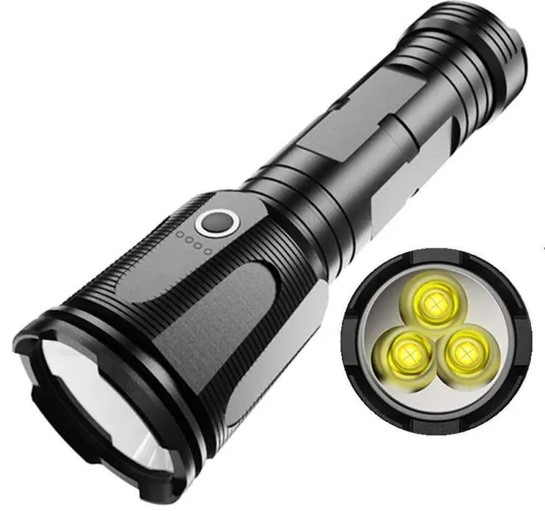
Picture this: A severe storm rolls through your neighborhood at 10:00 PM, instantly plunging your entire house into total pitch-black darkness. You fumble through a kitchen drawer, grab an old plastic torch, and switch it on—only to be greeted by anemic, yellowish light that barely illuminates your own shoes before fading out completely due to dead batteries.
If you have ever felt that cold surge of helplessness during a sudden power outage or emergency, you know that unreliable illumination is a real safety hazard. Over my ten years of hands-on experience evaluating home safety systems and responding to structural emergencies, I have seen far too many households rely on cheap, outdated incandescent torches until a crisis hits.
Illumination during an emergency should never be an afterthought. Investing in a high-intensity flashlight LED bright setup ensures that you can safely navigate dark stairwells, inspect circuit breaker panels, and signal for help when every second counts.
The Physics of Portable Illumination: Why Modern LEDs Change Everything
Traditional incandescent bulbs produce light by passing electricity through a delicate tungsten filament, wasting up to 90% of their energy as heat rather than light. When dropped, the fragile filament breaks instantly, leaving you in the dark.
Solid-state lighting technology transformed emergency readiness. Modern light-emitting diodes (LEDs) pass electrons through a semiconductor substrate, converting electrical current directly into brilliant photons with zero mechanical fragility.
Think of an old incandescent bulb like a flickering candle inside a delicate glass ornament—it burns out quickly and shatters under the slightest impact. A high-output flashlight LED bright unit, by contrast, operates like a solid highway lantern—shock-resistant, cool-running, and engineered to run efficiently for continuous hours.
+-------------------------------------------------------------------+
|                  EMERGENCY LIGHTING PERFORMANCE                   |
+------------------------------------+------------------------------+
| Old Incandescent Torch             | High-Output Flashlight LED   |
+------------------------------------+------------------------------+
| • Wastes 90% energy as heat        | • Converts 80%+ into light   |
| • Fragile tungsten filament breaks | • Solid-state shock resistance|
| • Dim, yellowish beam color        | • High CRI, crisp neutral white|
| • Rapid battery depletion          | • Extended runtimes & rechargeable|
+------------------------------------+------------------------------+
Decoding Technical Specifications: Lumens, Candela, and Beam Profiles
When searching for a dependable flashlight LED bright model, looking at price tags alone won’t tell you how it performs in a blackout. You need to understand three core optical measurements.
1. Lumens (Total Light Volume)
Lumens measure the total amount of visible light emitted by the diode in all directions. For home emergencies and workshop inspections, aim for a minimum output range of 800 to 2,000 lumens.
2. Candela and Throw Distance (Beam Intensity)
While lumens measure raw light volume, candela measures peak beam intensity in a single direction. Higher candela values mean a tightly focused beam that reaches far down long hallways or across outdoor properties.
3. Beam Profile: Flood vs. Throw
-
Flood Light (Wide Spatial Spread): Distributes light broadly across a large area, making it ideal for lighting up an entire living room during a blackout.
-
Thrower (Focused Hotspot): Concentrates light into a narrow beam, perfect for searching down long driveways or checking tree branches near overhead power lines.
+-------------------------------------------------------------------+
|                   BEAM SPECIFICATION GUIDE                        |
+----------------------+----------------------+---------------------+
| Target Application   | Output (Lumens)      | Preferred Profile   |
+----------------------+----------------------+---------------------+
| Indoor Room Light    | 300 – 800 Lumens     | Wide Flood          |
| Home Inspection      | 800 – 1,500 Lumens   | Balanced Beam       |
| Outdoor Perimeter    | 2,000+ Lumens        | High Candela Throw  |
+----------------------+----------------------+---------------------+
Power Logistics: Lithium-Ion vs. Household Alkaline Batteries
Your light is only as reliable as the power cell driving it. Choosing the right chemistry dictates shelf life, runtime, and maintenance intervals.
1. Rechargeable 18650 and 21700 Lithium-Ion Cells
High-performance LED units demand significant voltage to hit high output levels. Rechargeable 18650 and 21700 lithium-ion batteries provide superior energy density, sustaining high lumen output without voltage sag. Look for flashlights with integrated USB-C charging ports for easy top-offs.
2. Primary Lithium AA / AAA Backups
While rechargeable batteries are unmatched for daily readiness, long-term emergency kits benefit from dual-fuel flashlights that accept standard AA or AAA primary lithium batteries. Primary lithium cells have a shelf life of up to 10–15 years and will not leak corrosive acid like budget alkaline batteries.
Step-by-Step Emergency Staging: Building a Readiness Network
Having a high-output flashlight LED bright unit won’t help if you can’t locate it during an unexpected blackout.
Step 1: Establish Primary Station Outlets
Keep a dedicated primary light staged in a high-visibility, accessible location on every floor of your home—such as a nightstand drawer, near the main electrical panel, and by the primary exit door.
Step 2: Utilize Silicone Diffusers for Ambient Lighting
In a prolonged power outage, holding a flashlight gets tiring fast. Attach a translucent silicone diffuser cone over the bezel of your flashlight LED bright unit and stand it vertically on a flat surface (tail-standing). This transforms a directional beam into an omnidirectional lantern that illuminates an entire room comfortably.
Step 3: Schedule Bi-Annual Battery Audits
Set a calendar reminder twice a year (such as when daylight saving time changes) to check charge levels on all lithium-ion cells and replace aging primary batteries.
Expert Advice: Hidden Traps & Technical Nuances
Over a decade of field experience, I have seen plenty of common mistakes that turn high-end gear into useless metal during an emergency:
-
Beware of Thermal Throttling: Ultra-bright flashlights generate significant heat when operated on “Turbo Mode.” Most modern LED drivers automatically step down the brightness after 1–2 minutes to protect internal circuitry from overheating. Do not assume your light will run at 3,000 lumens continuously for hours.
-
Watch Out for “Parasitic Drain”: Many modern flashlights feature electronic side-switches that draw a microscopic amount of power even when turned off. Over several months, this slow parasitic drain can flatten your battery completely. Slightly loosen the tail-cap a quarter turn (mechanical lock-out) when storing lights long-term to break the circuit.
-
Avoid Cheap No-Name Batteries: Never purchase unbranded, ultra-cheap lithium-ion batteries. Low-quality cells lack internal thermal protection circuits and can fail dangerously under high discharge rates. Stick to reputable, protected brand-name cells.
Light Up Your Emergency Preparedness Today
Upgrading your home’s emergency lighting system to a high-output flashlight LED bright setup is a simple, cost-effective step toward real peace of mind. By replacing outdated filament torches with durable, high-lumen LED gear, you guarantee that your household stays safe, clear-headed, and well-lit when unexpected blackouts happen.
Take a moment tonight to evaluate your emergency gear: If the grid went dark right now, do you have reliable illumination ready at your fingertips?
What is your current emergency light setup, and what features do you prioritize most in a flashlight? Drop your thoughts or questions in the comments below—I would love to help you build the ultimate blackout prep kit!
