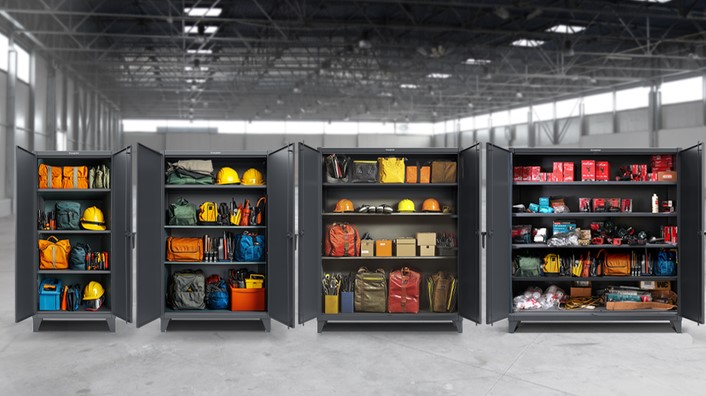
Imagine pulling your car into the garage after a long workday, only to be greeted by a chaotic sea of plastic tubs sagging under their own weight, rusty power tools sitting on damp concrete, and particle-board shelves buckling in the summer humidity.
Over my 10+ years optimizing residential workspaces and executing garage retrofits, I have watched countless homeowners fall into the cheap storage trap. They spend thousands of dollars on high-end tools, lawn equipment, and automotive gear, only to store them on flimsy pressboard or flimsy plastic units that collapse after two seasons.
Here is an unvarnished truth straight from the job site: when it comes to long-term asset protection in an unconditioned environment, investing in commercial-grade garage cabinets steel systems is not an aesthetic splurge—it is a structural necessity that secures your gear, maximizes floor space, and withstands harsh environmental wear for decades.
Why Choose Steel Over Wood or Plastic Storage Systems?
Think of your garage as an unheated, high-humidity extension of your house that faces constant thermal swings, road salt, automotive fluids, and structural dust.
If wood framing and particle board act like porous sponges in humid climates, heavy-gauge garage cabinets steel assemblies act like an armored vault. Cold-rolled steel does not warp, absorb moisture, rot, or harbor pest infestations.
During my early years managing custom garage overhauls, I frequently pulled out bloated particle-board cabinets that had absorbed moisture directly from concrete slab floors. Steel cabinetry eliminates that vulnerability entirely, providing a rigid, non-combustible shell that keeps your valuable tools dry and secure.
Technical Performance: Gauge Thickness, Load Ratings, and Powder Coatings
When evaluating professional storage hardware, understanding metal fabrication specs ensures you purchase systems built for actual weight capacities rather than cheap decorative units.
[ Sheet Metal Thickness vs Strength ]
 24-Gauge (0.0239") ──► Light Duty (Buckles easily under heavy loads)
 20-Gauge (0.0359") ──► Medium Duty (Standard consumer garage grade)
 18-Gauge (0.0478") ──► Heavy Duty (Commercial Grade / Professional Standard)
 16-Gauge (0.0598") ──► Industrial Grade (Maximum structural rigidity)
To make an informed decision when procuring garage cabinets steel modules, evaluate these core engineering metrics:
-
Steel Gauge Rating: Lower gauge numbers signify thicker, stronger steel. While budget consumer units use thin 24-gauge sheet metal that oil-cans easily, commercial systems utilize 18-gauge or 16-gauge cold-rolled steel capable of supporting massive static loads.
-
Shelf Load Capacities: High-grade steel cabinets feature reinforced shelf channels rated for 300 lbs to over 1,000 lbs per shelf, allowing you to store heavy engine parts, paint cans, and hydraulic jacks without deflection.
-
Powder-Coated Finish: Liquid paint chips and peels easily under impact. Industrial steel cabinets undergo electrostatically applied powder coating baked at high temperatures, creating an ultra-durable barrier resistant to rust, chemical spills, and scratching.
-
Full-Extension Ball-Bearing Slides: Drawers equipped with heavy-duty ball-bearing slides ensure smooth operation even when fully loaded with heavy hand tools or pneumatic gear.
Modular Cabinet Layouts: Floor-Mounted vs. Wall-Hanging Systems
Not every garage floor plan has the same structural footprint. Understanding configuration options allows you to optimize square footage effectively.
| Cabinet System | Mounting Mechanism | Ideal Use Case | Key Advantages |
| Floor-Mounted (Freestanding) | Heavy-duty adjustable leveling legs | Heavy equipment, power tools, bulky automotive fluids | Maximum weight capacity, easy to relocate during shop reconfigurations |
| Wall-Mounted (Off-Floor) | Structural wall cleats (Slatwall or french cleats) | Variable floor elevations, flood-prone regions | Clears floor space completely, allows easy hose-down cleaning underneath |
| Mobile Tool Cabinets | Heavy-duty locking swivel casters | Active workspaces, detail bays | Roll tools directly to the project vehicle, locks in place during use |
Step-by-Step Installation: Field-Tested Protocol
Proper installation is critical to ensure your heavy steel cabinets remain plumb, secure, and tip-proof. Follow this professional step-by-step workflow:
Step 1: Map the Slab Slope and Wall Studs
Garage concrete slabs are sloped toward the driveway door for drainage. Use a 4-foot spirit level or laser level to identify floor height variations. Locate and mark all wall studs using a high-grade stud finder.
Step 2: Assemble the Base Frame and Leveling Feet
If using floor-mounted garage cabinets steel units, thread the heavy-duty leveling legs into the cabinet base. Position the cabinet against the wall and adjust the leveling feet until the unit is 100% plumb vertically and level horizontally.
Step 3: Anchor to Structural Wall Framing
Never leave tall steel cabinets freestanding without mechanical anchors! Secure the top rear panel directly into solid wood studs using heavy-duty lag bolts paired with fender washers, or use masonry anchors if mounting against poured concrete foundation walls.
Step 4: Grout or Bolt Multiple Cabinets Together
For continuous modular runs, align adjacent cabinet side walls and bolt them together through factory pre-punched holes. Joining units together creates a unified, rigid monolith that resists racking and shifting.
Expert Advice: Tips Pro & Hidden Warnings from the Field
Expert Insight: In a coastal garage retrofit I led a few years ago, the homeowner bought expensive steel cabinets but mounted them directly to raw concrete floor slabs without adjusting the leveling feet. Salt-laden moisture pooled underneath the bottom edges, rusting out the unpainted base seams within three years. Always elevate your cabinet bases at least 2 to 4 inches off the raw slab!
Hidden Warnings to Keep in Mind:
-
Beware of Concrete Curb Obstructions: Many garages feature a raised concrete stem wall around the perimeter. Check cabinet depth dimensions to ensure doors can clear floor curbs without interfering with wall mounting cleats.
-
Mind Overhead Garage Door Tracks: Before purchasing tall 80-inch steel locker cabinets, double-check clearance around ceiling-mounted garage door openers, torsion springs, and track assemblies when doors are fully open.
-
Verify Door Hinge Quality: Ensure your cabinet doors utilize 3-way adjustable concealed European hinges or full-length piano hinges. Cheap butt hinges sag under the weight of door-mounted tool racks over time.
Conclusion
Transforming your garage into a functional, clean, and secure workspace starts with choosing hardware built for tough environments. Upgrading to heavy-gauge garage cabinets steel storage protects your investment in tools and equipment, maximizes available floor space, and delivers an industrial-grade finish that lasts a lifetime.
Take a hard look at your garage storage layout this weekend. Is your current shelving setup truly securing your assets, or is it time to upgrade to steel?
What storage challenges are you currently dealing with in your garage or workshop? Have you worked with steel modular systems before? Drop your questions and project ideas in the comments below!
