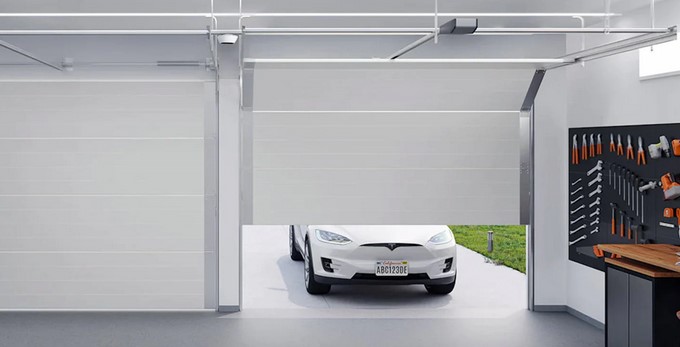
It’s 2:00 AM, and you’re jolted awake by a faint, mechanical hum echoing through the house. You realize with a sinking heart that you can’t remember if you hit the “close” button on your remote after hauling in the groceries. In many modern homes, the garage is the “soft underbelly”—a massive 16-foot-wide gateway that often leads directly into your kitchen or laundry room.
In my decade of traversing crawlspaces and inspecting home perimeters, I’ve seen homeowners spend thousands on reinforced front doors and high-tech smart locks, only to leave the largest entrance to their home protected by nothing more than a flickering, misaligned Garage Door Sensor. If that sensor isn’t dialed in, your home security has a gaping hole that any opportunistic intruder can exploit.
The Invisible Tripwire: How Your Garage Door Sensor Actually Works
To the uninitiated, those small boxes near the floor are just “the things that make the door go back up if the dog runs under it.” But from a technical standpoint, these are your home’s first line of perimeter defense.
Think of your Garage Door Sensor (specifically the photo-eye system) like a silent, invisible tripwire. One unit sends an infrared beam—the “sending eye”—and the other, the “receiving eye,” catches it. As long as that beam is unbroken, the circuit is closed, and the motor is allowed to complete its cycle.
When that beam is interrupted, it’s not just a safety feature to prevent crushing; it’s a data point. In a modern integrated security setup, that “break” in the beam can trigger floodlights, send a push notification to your phone, or even lock the interior door leading into your house.
Common Vulnerabilities in Residential Garage Security
In my years of practical experience, I’ve noticed that most security breaches at the garage level happen because of physical neglect, not high-tech hacking. A faulty sensor doesn’t just prevent the door from closing; it often tricks the homeowner into leaving it partially open.
The “Ghost Opening” Phenomenon
Have you ever closed your garage, driven away, and returned to find it wide open? This is usually caused by a misaligned Garage Door Sensor. If the beam is barely touching the edge of the receiver, vibration from the door moving can break the connection, triggering the “auto-reverse” safety mechanism.
Sun Phantom Interference
I once spent three hours troubleshooting a client’s “haunted” garage door that refused to close only between 4:00 PM and 5:00 PM. The culprit? Direct sunlight. The infrared rays from a setting sun can wash out the receiver’s ability to see the beam. This is a technical nuance many beginners miss, but it leaves your home vulnerable during specific windows of the day.
Hardening the Perimeter: Technical Optimization Strategies
If you want to move from “beginner” to “secured,” you need to look beyond the basic installation. Hardening your perimeter means ensuring your Garage Door Sensor is physically and electronically optimized.
1. Precision Alignment and Vibration Dampening
Most sensors are mounted on flimsy “clip-on” brackets attached to the door tracks. Over time, the vibration of the heavy door moving up and down knocks them out of sync.
-
Pro Tip: Upgrade your brackets to floor-mounted or wall-anchored steel versions. Use a laser level—not just your eyes—to ensure the sending and receiving units are perfectly centered on each other.
2. Integration with Smart Home Ecosystems
A standalone sensor is a safety tool. A networked Garage Door Sensor is a security asset. By connecting your opener to a Z-Wave or Wi-Fi bridge, you can:
-
Set “Close After” timers (e.g., if the beam hasn’t been broken for 10 minutes, close the door).
-
Receive “Left Open” alerts on your smartwatch.
-
Log every time the beam is tripped, giving you a timeline of activity in your driveway.
The “Garage Door Sensor” vs. The “Contact Sensor”
It’s important to distinguish between the two types of sensors used to harden your garage. For true security, you need a “Defense in Depth” strategy:
| Sensor Type | Function | Security Value |
| Photo-Eye (Infrared) | Detects objects in the path of the door. | Prevents accidental openings/closings; detects entry. |
| Tilt/Contact Sensor | Detects if the door is horizontal or vertical. | Tells your alarm system if the door is physically open. |
| Carbon Monoxide Link | Monitors air quality in the garage. | Safety-critical; can trigger the door to open for ventilation. |
Expert Insight: I always recommend a “Dual-Layer” approach. Use the infrared Garage Door Sensor for operational safety and entry detection, but add a smart tilt sensor to the top panel of the door to confirm it is actually locked and latched.
Advanced Troubleshooting: When the “Magic Eyes” Fail
If your sensor’s LED light is flickering or off, don’t call a contractor just yet. Most issues are solved with these three steps:
-
Lens Cleaning: Use a microfiber cloth and a tiny drop of water. Dust, cobwebs, and even salt spray (if you live near the coast) can dim the infrared beam.
-
Wire Integrity Check: Rodents love the taste of the low-voltage bell wire used for sensors. Look for small chew marks or frayed insulation.
-
The Cardboard Test: Place a box in the path. If the door closes anyway, your sensors are either bypassed or faulty. This is a major security risk.
Expert Advice: The Hidden Warning
The “Zip-Tie” Danger: Many people, frustrated by sensors that keep reversing the door, will zip-tie the sensors to each other on the ceiling or bypass them entirely. Never do this. Beyond the obvious safety risk to children and pets, a bypassed sensor often voids your homeowner’s insurance if a theft occurs. If your sensors aren’t working, fix the alignment—don’t cheat the system.
The Future of Garage Access: AI and Computer Vision
We are moving into an era where the traditional Garage Door Sensor is being augmented by AI-driven cameras. These systems don’t just look for a broken beam; they recognize faces, license plates, and even the difference between a person and a stray cat.
However, even the most advanced AI still relies on the mechanical reliability of the door system. If the physical sensors aren’t maintained, the smartest software in the world can’t pull that heavy door shut.
Conclusion: Securing Your Kingdom
Your home is your castle, and the garage is its drawbridge. By focusing on the technical health of your Garage Door Sensor, you aren’t just making your life more convenient—you are hardening your perimeter against the “low-effort” entry methods used by most burglars.
Don’t wait for a 2:00 AM scare to check your alignment. Grab a screwdriver, a clean rag, and a level this weekend. A well-maintained sensor is a silent sentry that never sleeps.
Is your garage the weak link in your home security? Check your sensor’s LED lights today—if they aren’t solid and bright, it’s time for a tune-up. If you have questions about specific smart-home integrations, drop a comment or reach out!
