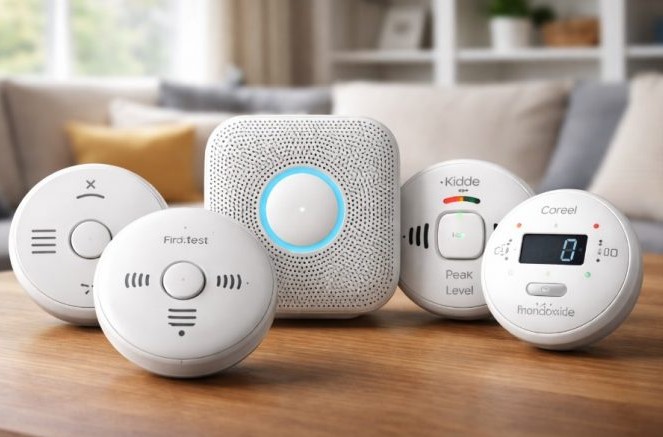
We have all experienced that ear-splitting 3:00 AM chirp—the dreaded battery warning from a traditional smoke alarm mounted on a 10-foot ceiling. Most homeowners react by grabbing a broom handle, whacking the unit until it falls off the bracket, and stuffing it into a hallway closet.
In my ten-plus years as a home improvement consultant and retrofitting specialist, I’ve pulled dozens of disabled, battery-less smoke detectors out of homes. It is a terrifying realization when you consider that fire can engulf a residential space in under three minutes.
Relying on an isolated 9V plastic buzzer manufactured two decades ago to protect your family is like relying on a carrier pigeon for instant emergency communications. Modern home safety demands real-time intelligence, and upgrading to a connected smart smoke detector bridge the life-saving gap between local alarm notification and immediate, remote emergency action.
The Anatomy of Modern Detection: How Smart Sensors Outperform Legacy Alarms
Traditional smoke alarms are simple acoustic screamers—they emit a high-decibel tone, but only if you are physically inside the home to hear it. If a electrical short occurs in your garage while you are at work or on vacation, a legacy alarm will scream to an empty room until the structure burns down.
A modern smart smoke detector acts as a networked life-safety node. It pairs optical sensing chamber technology with Wi-Fi or Z-Wave microcontrollers, instantly sending push notifications to your smartphone, triggering automated smart home routines, and alerting central emergency monitoring stations.
                      SMOLDERING FIRE DETECTED
                                 |
                                 v
                 +-------------------------------+
                 |  SMART SMOKE DETECTOR UNIT    |
                 +-------------------------------+
                                 |
        +------------------------+------------------------+
        |                        |                        |
        v                        v                        v
  [ Local Alarm ]       [ Cloud Notification ]    [ Automation Routine ]
(85dB Horn & Voice)    (Instant Phone Alert)     (HVAC Off / Lights On)
By decoupling alert delivery from physical proximity, a smart smoke detector grants you the single most valuable resource in a residential fire: time.
Technical Considerations: Dual-Spectrum Photoelectric vs. Ionization
When advising clients on safety retrofits, I always insist on understanding the core sensor technology inside their chosen unit.
Historically, smoke alarms used ionization sensors, which excel at detecting fast-flaming fires but are notoriously prone to false alarms caused by burnt toast or bathroom steam. Modern smart alarms predominantly utilize dual-spectrum photoelectric sensors.
-
Blue LED Waveband: Detects fine smoke particles generated by fast-burning cellulosic materials like paper and dry wood.
-
Infrared Waveband: Detects larger smoke particles produced by slow, smoldering fires found in upholstered furniture, mattresses, and synthetic carpets.
By analyzing the light scatter from both wavelengths, a smart smoke detector accurately distinguishes between actual combustion hazards and innocent cooking vapor, virtually eliminating annoying false alarms.
Comparing Smart Smoke Detector Ecosystems
Choosing the right device configuration depends on your existing home infrastructure, wiring layout, and smart automation hubs.
| Feature / Spec | Hardwired (120V with Battery Backup) | Battery-Powered (10-Year Sealed) | Hybrid Smart Puck / Listener |
| Power Source | AC Line Voltage + Lithium Backup | Internal 3V Lithium Cell | Outlet Powered or Battery |
| Interconnectedness | Physical Traveler Wire + Wireless Mesh | Wireless Mesh (Wi-Fi/Z-Wave/Zigbee) | Acoustic Listening to Legacy Units |
| Best For | New builds, recent renovations | Older homes without ceiling wiring | Budget-friendly smart upgrades |
| Lifespan | 10 Years | 10 Years | 5–10 Years (depends on sensor) |
Strategic Placement and Installation Guide
Mounting your smart smoke detector in the wrong spot can delay alarm triggers by critical minutes or cause communication drops with your home router.
Step 1: Map the Coverage Zones
According to National Fire Protection Association (NFPA) standards, your installation map should cover:
-
Inside every bedroom or sleeping area.
-
Outside immediate sleeping quarters (hallways).
-
On every level of the home, including basements and finished attics.
 [ Attic Level ]     -------------------------> [ Smart Detector ]
 [ Second Floor ]    [ Bedroom ] -> [ Smart ]   [ Hallway ] -> [ Smart ]
 [ Main Floor ]      [ Living Room ] -> [ Smart ] [ Kitchen (10ft away) ]
 [ Basement ]        -------------------------> [ Smart Detector ]
Step 2: Mind the Airflow Dead Zones
Never install a smart smoke detector directly in a corner where walls meet the ceiling. Air stagnant zones prevent smoke from entering the optical chamber quickly.
Mount the unit on the ceiling at least four inches away from any side wall, or on a wall between four and 12 inches below the ceiling line. Avoid placing units within 3 feet of HVAC supply vents or ceiling fan blades, as turbulent airflow sweeps smoke away from the sensors.
Step 3: Establish a Unified Automation Rule
Once your smart smoke detector connects to your smart home ecosystem (such as Apple Home, SmartThings, or Home Assistant), set up automated emergency safety scripts:
-
HVAC Shutdown: Program your smart thermostat to shut down blowing fans immediately when smoke is detected to prevent spreading toxic smoke through ductwork.
-
Pathway Lighting: Trigger smart light bulbs along hallway exit routes to illuminate full brightness (set to bright white or red) to guide your family through dark or smoky rooms.
Expert Advice: Pro Tips and Hidden Pitfalls
💡 Pro Tip: The “Interconnected Mesh” Advantage
Always purchase units that support wireless interconnectivity. If a unit in the basement detects a smoldering electrical fire, every connected smart smoke detector throughout the second floor and bedrooms will sound the alarm simultaneously, announcing the exact room location via voice prompt before smoke ever reaches the top floor.
⚠️ Hidden Pitfall: The 10-Year Hard Expiration
A common misconception among homeowners is that replacing the batteries keeps a smoke detector working indefinitely. The photoelectric sensors inside any smart smoke detector degrade over time due to dust accumulation and chemical degradation. Every detector must be completely replaced every 10 years from its manufacture date—stamped clearly on the back of the chassis.
Frequently Asked Questions
Will my smart smoke detector still sound an alarm if the Wi-Fi goes down?
Yes. The local 85-decibel siren and interconnected alarm triggers operate independently of your internet connection. Wi-Fi or cellular connectivity is only required to send remote smartphone notifications and cloud-based alerts.
Can I install a smart smoke detector near my kitchen?
Avoid placing units directly above stoves or ovens. To prevent nuisance alarms from normal cooking, install the detector at least 10 feet (3 meters) away from fixed cooking appliances.
Protect What Matters Most Today
Upgrading your home security isn’t just about protecting physical assets—it’s about buying precious time when seconds count. Integrating a high-performance smart smoke detector into your living space replaces outdated, passive noise-makers with an active, intelligent life-safety network that keeps watch over your home 24/7, no matter where you are in the world.
Have you upgraded your home’s safety system to smart detection yet, or are you still dealing with traditional 9V alarms? Drop a comment below with your current home setup, and let’s discuss the best safety retrofit for your family!
